
By midsummer, Charlotte afternoons regularly push toward 90 degrees under heavy, humid air, and a dark shingle roof sitting in that sun runs far hotter than the air around it. Heat softens asphalt, dries out the oils that keep shingles flexible, and bakes the attic from above. Humidity adds a slower kind of damage, feeding the dark algae streaks and green moss that spread across shaded slopes. None of it looks dramatic on any single day, but a summer of it ages a roof more than most winters do.
That pattern matters because most homeowners only think about the roof after something breaks. The Piedmont works on a calendar, though. Each season brings its own predictable stress, from spring hail to autumn leaves to the occasional ice storm, and each one tends to expose a different weak point. Knowing what to watch for and when lets you catch problems while they are still small repairs.
When a storm does leave marks, a Charlotte roofing contractor like Elevate Roofing and Exteriors can handle the roof repair and walk you through roof insurance claims assistance, helping you document damage and understand how the claims process generally works, though every policy and outcome depends on your insurer. Their crews also install and repair gutters, which often take the first blow when hail or falling limbs hit. After any hard storm, ask elevateexteriors.com about a storm damage assessment before small damage turns into a leak.
Summer: Heat, Humidity and Afternoon Storms
What surfaces. Shingles lose granules faster in high heat, and blisters or curling edges start showing on older roofs. Poor attic ventilation traps heat under the deck, cooking shingles from below and stressing the underlayment. On north facing slopes and under the tree canopy, algae streaks and moss hold moisture against the surface for days after each storm.
What to check from the ground. Look for dark vertical streaks, patches of green growth, and shingle edges that curl up instead of lying flat. Check downspout outlets for heavy piles of granules, which look like coarse dark sand. Inside, a hot, stuffy attic or rising cooling bills can point to blocked vents.
When to call a roofer. Call when curling spreads across a slope, when moss grows thick enough to lift shingle edges, or when afternoon storms leave stains on ceilings near exterior walls.
Fall: Leaves, Clogs and Tropical Rain
What surfaces. Charlotte’s oaks, maples and pines drop a season’s worth of debris onto roofs and into gutters within a few weeks. Clogged gutters overflow, soak fascia boards, and push water back under the roof edge. Valleys collect wet leaf piles that stay damp and wear down the shingles beneath them. Early fall can also bring heavy rain from the remnants of tropical systems moving inland.
What to check from the ground. Watch for gutters sagging under weight, water spilling over the front edge during rain, and dark staining along fascia boards. Look for leaf mats sitting in valleys and branches resting directly on the roof.
When to call a roofer. Call if gutters pull away from the house, if fascia looks soft or discolored, or if any limb is touching the shingles. Late fall is also the last comfortable window for repairs before cold weather slows sealant from bonding.
Winter: Cold Snaps and Occasional Ice
What surfaces. Charlotte winters are mild most years, but sudden cold snaps and the rare ice storm do real damage. The December 2002 storm coated much of the region in ice and brought down trees across older neighborhoods, and heavy ice still threatens roofs mainly through falling limbs. Freezing rain can also back up at clogged gutters and refreeze along the roof edge, forcing water under shingles. Cold makes brittle older shingles crack more easily when wind lifts them.
What to check from the ground. After any freeze, look for broken limbs on the roof, icicles hanging from gutters, and shingles missing along ridges and edges. Inside, check ceilings and upper walls near eaves for new water spots once things thaw.
When to call a roofer. Call right away if a limb has punctured or dented the roof, if gutters tore loose under ice, or if leaks appear during the thaw.
Spring: Severe Storms and Hail
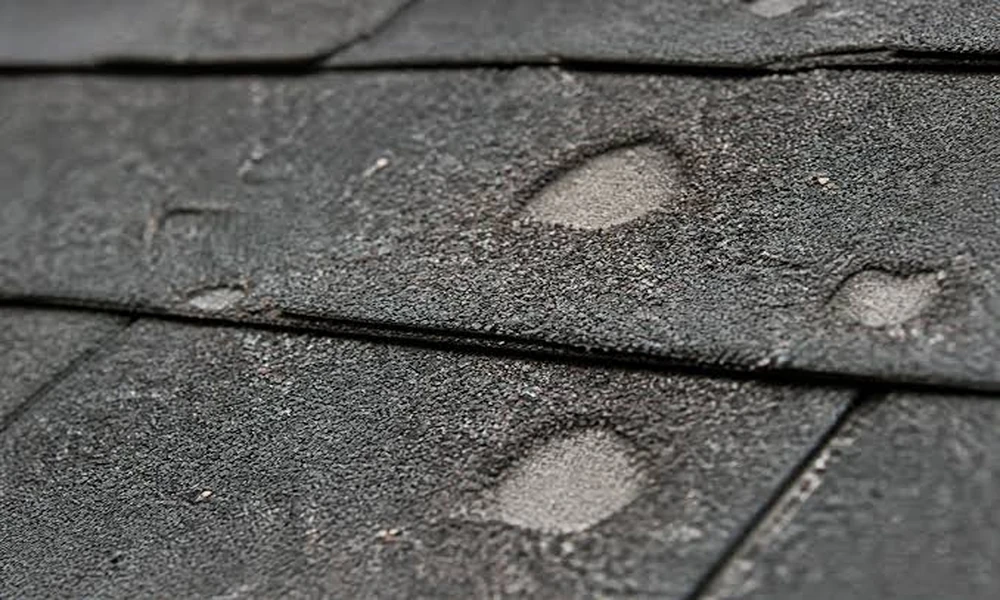
What surfaces. Spring is peak severe weather season in North Carolina. According to the NC State Climate Office, May has produced more confirmed hail reports than any other month, with more than 2,500 since 1955. Hail bruises shingles, knocks loose granules, and dents gutters, vents and flashing. Strong straight line winds lift shingle tabs and break their seal, leaving them prone to blowing off in the next storm.
What to check from the ground. Look for dents in gutters, downspouts and metal vent caps, which are easier to spot than shingle damage. Check the yard for shingle pieces after high winds, and look for sudden granule piles at downspout outlets.
When to call a roofer. Call after any storm that leaves visible hail or dents on cars, mailboxes or gutters, even if the roof looks fine from below. Hail damage often hides in plain sight and shows up as leaks months later.
| Season | Roof risk | What to check or repair |
|---|---|---|
| Summer | Heat aging, attic heat buildup, algae and moss | Curling shingles, granule loss, attic ventilation, growth on shaded slopes |
| Fall | Leaf buildup, gutter clogs, tropical rain | Gutters, fascia, valleys, branches touching the roof |
| Winter | Ice weight, falling limbs, refreezing at edges | Limb damage, torn gutters, missing edge shingles, thaw leaks |
| Spring | Hail, high winds, lifted tabs | Dented metal, bruised or missing shingles, broken seals |
Reading the Roof Year as One Cycle
The seasons feed each other. A summer of heat leaves shingles brittle before winter, fall clogs set up ice problems at the roof edge, and spring hail opens small breaks that summer storms then exploit. A ground level look after each change of season, plus a closer inspection after any severe storm, keeps those links from adding up into one large repair. The roof that gets checked in July and again in May is usually the one that never surprises its owner in January.

Comments are closed.