Category

Business

Category

Asset protection is a legal strategy designed to safeguard personal and business assets from potential risks such as lawsuits, creditor claims, and unforeseen financial liabilities. While asset protection is often misunderstood as a way to hide assets, legitimate asset protection focuses on lawful planning techniques that reduce exposure to risk before problems arise. An asset protection lawyer helps individuals understand how these strategies work within the boundaries of the law and how to structure assets responsibly.

What Is Asset Protection?

Asset protection involves organizing ownership of property, investments, and business interests in a way that minimizes vulnerability to legal claims. It is a forward-looking process that must be implemented before disputes or liabilities arise.

Common goals of asset protection include:

  • Preserving personal wealth
  • Reducing exposure to lawsuits
  • Protecting family assets
  • Supporting long-term financial stability

Proper asset protection complies with state and federal law and avoids fraudulent transfers.

Who Benefits From Asset Protection Planning?

Asset protection is not limited to the wealthy. Individuals who may benefit include:

  • Business owners
  • Professionals such as doctors or consultants
  • Real estate investors
  • Individuals with significant personal assets
  • Families planning long-term wealth preservation

An asset protection lawyer helps evaluate risk exposure based on profession, asset type, and personal circumstances.

Common Asset Protection Tools

Trusts

Certain trusts can separate legal ownership from beneficial use, helping protect assets from creditor claims while allowing controlled access.

Business Entities

Limited liability companies and corporations can shield personal assets from business liabilities when properly structured and maintained.

Titling and Ownership Strategies

How assets are titled—individually, jointly, or through legal entities—can affect creditor access.

Exempt Assets

Some assets receive statutory protection under state law, such as retirement accounts or homestead property.

An asset protection lawyer helps determine which tools are appropriate based on individual goals and legal constraints.

The Importance of Timing

Timing is critical in asset protection planning. Transfers made after a claim arises or litigation is anticipated may be challenged as fraudulent.

Key principles include:

  • Planning early
  • Avoiding last-minute transfers
  • Maintaining transparency and compliance

Proper planning reduces legal risk and strengthens asset protection strategies.

Asset Protection vs. Estate Planning

While asset protection and estate planning often overlap, they serve different purposes:

  • Asset protection focuses on shielding assets during life
  • Estate planning focuses on asset transfer after death or incapacity

An integrated approach ensures both protection and orderly succession.

Legal and Ethical Boundaries

Asset protection must comply with laws governing fraudulent conveyance, disclosure requirements, and creditor rights. Ethical planning respects:

  • Court authority
  • Creditor rights
  • Legal transparency

An asset protection lawyer helps ensure strategies remain legally sound and defensible.

Risks of Improper Asset Protection

Improper planning can result in:

  • Invalid transfers
  • Court reversal of transactions
  • Legal penalties
  • Increased scrutiny during litigation

Professional guidance reduces these risks significantly.

Final Thoughts

Asset protection is a proactive legal strategy that helps individuals preserve wealth and reduce exposure to risk. Understanding lawful tools, timing considerations, and legal boundaries is essential to effective planning. With guidance from an experienced asset protection lawyer, individuals can structure assets responsibly while maintaining compliance with applicable laws.

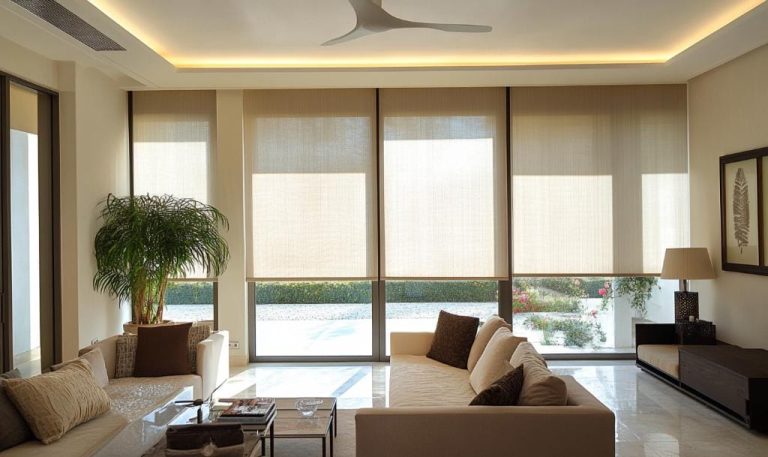
Many homeowners now seek simple ways to manage light privacy and daily routines with ease. This shift has increased interest in advanced window options that work smoothly without effort. The motorised blinds sunshine coast fit this need by offering controlled movement through simple commands. They help manage brightness while supporting a neat indoor look. These systems reduce manual effort while improving indoor balance. With simple control methods, they fit well into present-day homes. Their smooth operation suits daily schedules and helps maintain a calm indoor setting without stress or noise.

Why are they suitable for modern interiors?

Their clean design matches current interior styles easily. Cords are hidden, which keeps spaces tidy. This look suits open rooms and simple decor choices. The neat structure also reduces visual clutter while supporting a calm living area.

How do they improve daily convenience?

Users can adjust coverings without moving from their place. Timed settings allow automatic movement during set hours. This supports busy schedules and adds ease to daily tasks. It also helps maintain privacy without constant attention.

Why are they ideal for large windows?

Large glass areas benefit from smooth coverage without heavy effort. These systems move evenly across wide spaces. This ensures consistent light control and reduces strain from manual handling. It also adds balance to large interior layouts.

How do they enhance home safety?

Automated movement can give the appearance of activity even when away. This adds a sense of protection. Timed opening and closing help reduce unwanted attention while maintaining a normal indoor pattern.

Why do they support better sleep routines?

Controlled light levels help create darker rooms during rest hours. This supports better sleep quality. Morning light can be set to enter gently, which helps wake up naturally without sudden brightness.

How do they reduce wear and tear?

Manual pulling often causes damage over time. Automated movement lowers physical stress on materials. This helps maintain fabric quality and extends product life with less need for repairs.

Why are they easy to maintain

These systems require minimal upkeep. Smooth operation reduces dust buildup from frequent handling. Occasional cleaning keeps them working well. Simple design elements make care easy for daily use.

How do they add value to living spaces?

Smart features often increase property appeal. Buyers value ease of use and clean design. These systems add a modern touch that supports better functionality and visual order.

Why do they suit different room types?

They work well in bedrooms, living areas, and work zones. Light control can be adjusted for each purpose. This flexibility supports varied daily activities with ease.

How do they connect with home systems?

Many options link with control hubs for smooth operation. This allows central access from one device. It simplifies management while keeping settings consistent across spaces.

Choosing these systems offers a balanced way to manage light privacy and daily routines. They support ease while reducing effort and improving indoor control. With thoughtful use, they help maintain steady conditions throughout the day. The motorised blinds sunshine coast provide a practical option for those seeking simple control, reliable performance, and a cleaner indoor setup without added effort.

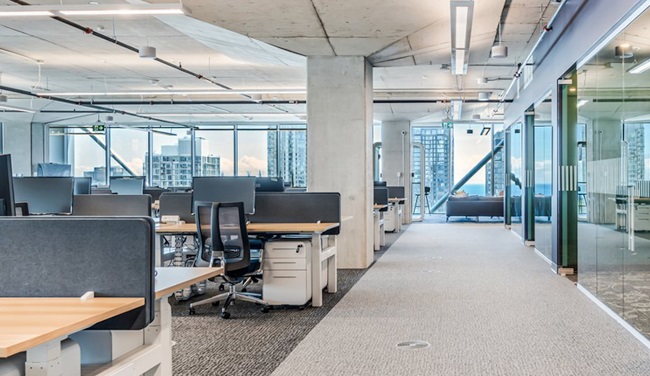
The contemporary workplace is contradictory. It wants transparency. It need seclusion. The glass cubicle, which combines the open plan’s communal attitude with a private room’s concentration, captures this basic contradiction. However, these translucent barriers sometimes cause the “fishbowl effect,” when visual connection sacrifices aural secrecy. Sound waves from a private phone conversation, negotiation, or HR discussion leak into the public sphere via conventional glass and poorly sealed frames. This difficulty has driven architects and sound engineers to create sophisticated acoustic solutions that turn glass boxes into silent spaces. The objective is now to construct an invisible sound barrier that preserves transparency and communication.

More Than Glass: Laminated Core

The first barrier to noise is the glass panels. Standard tempered glass is durable yet conducts sound well, making it unsuitable for acoustic seclusion. Use acoustic laminated glass. This windowpane is unusual. Instead, it is a sandwich of two or more sheets of glass permanently linked together with a sound-dampening polyvinyl butyral interlayer. The hidden weapon is its tiny, translucent polymer core. This viscoelastic interlayer absorbs and dissipates sound waves as very unnoticeable heat when they hit the outer glass pane. It blocks sound from resonating. Acoustic laminated glass may block human speech frequencies with a Sound Transmission Class (STC) value far greater than monolithic glass.

Leak Sealing: Sound Exits

Even the best acoustic glass is useless if sound can get around it. Similar to water, sound seeks the route of least resistance via cracks and gaps. Thus, a glass cubicle’s structure and door system are as important as its panels. Premium acoustic glass cubicles are sealed systems. Engineers carefully inspect glass-frame joints and doorways. Compressible silicone or thick rubber acoustic seals that go around the door and frame provide an airtight seal when closed are high-performance options. The automated drop-down seal at the bottom of the door lowers a rubber gasket to the floor when the door shuts, minimizing the infamous sound gap. These features work together to protect the glass’s high STC rating against leaks.

Controlling Echo: Interior and Exterior Acoustics

Create a private room by regulating sound on both sides of the glass wall. The cubicle’s rough, shiny glass and metal surfaces may make discussions echoey and unpleasant. In response, designers use sound-absorbing materials. Fabric-wrapped acoustic panels on non-glass walls, sound-dampening tiles in the ceiling, and carpets may absorb sound waves. The bigger open-plan office’s acoustics must also be addressed. Quiet offices might make private conversations in glass rooms appear louder and more noticeable. Many firms use sound masking to reduce this. These devices provide a soft, inconspicuous background sound, similar to airflow, that elevates the ambient noise level sufficiently to make human voice less audible from a distance, hiding cubicle talks.

Engineering Privacy into Openness

True acoustic privacy in a glass cubicle requires careful engineering concepts, not a single product. A comprehensive approach. High-performance laminated glass panels absorb sound energy at its source, while painstakingly constructed frames and airtight seals prevent noise leakage. This sturdy cage is then fitted with sound-absorbing materials for comfort and clarity, and sound masking for privacy. Modern workplaces may ultimately address their basic conflict with these advances. It shows that with the correct technology, you can be seen but not heard. It has the light, connection, and collaborative aesthetic of an open design without losing privacy and concentrated work.

Timber has long been a staple of construction, but in the era of net-zero energy goals and low-carbon development, timber beams are making a serious comeback. As buildings get smarter and greener, timber offers a structural solution that meets both performance demands and sustainability benchmarks.

In this article, we examine timber’s capabilities through the lens of structural engineering, construction efficiency, environmental impact, and cost-benefit analysis. Along the way, we’ll present key data and real-world examples that show how timber is not just relevant it’s revolutionary.

Expanded Insights on Timber Engineering and Applications

To fully appreciate timber’s potential, it’s crucial to explore its adaptability in building systems ranging from small residential projects to high-rise commercial developments. Engineered wood products like LVL, CLT, and glulam are not only stronger than traditional lumber, but also more reliable under load and better suited to modern construction workflows.

Key Insight: Redbuilt reports that engineered wood consumption in North America has increased by 60% over the past decade, a testament to its growing role in structural applications.

These engineered products can be customized for nearly every load-bearing or spanning scenario, often replacing steel beams in places where weight and thermal bridging would otherwise compromise performance. For example, CLT panels can be used as floor slabs, shear walls, or even roof decking, thanks to their high dimensional stability.

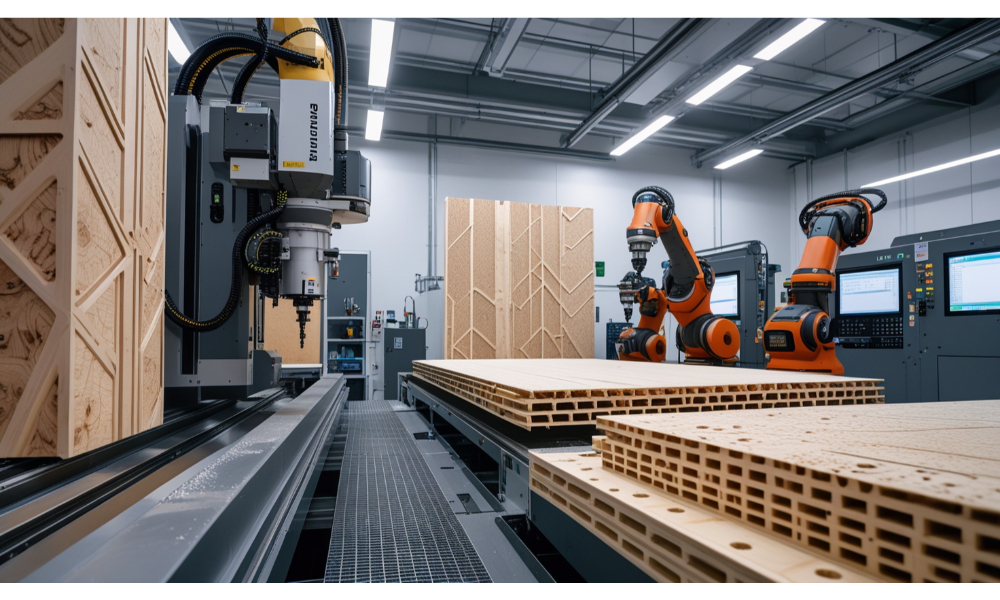
Timber’s strength and rigidity are further enhanced by modern fabrication methods like finger-jointing, pressure laminating, and CNC milling, allowing greater spans with fewer supports and more open-plan layouts.

The versatility of timber also plays out in its use for bridges, stadiums, and civic buildings. Its high strength-to-weight ratio simplifies design for long spans, while its visual appeal supports cultural identity and place-making. Architects around the world are increasingly designing civic spaces with exposed frameworks made from timber, highlighting its ability to blend functionality with symbolism.

Timber construction is also pushing the boundaries of height and complexity, supported by research in hybrid systems where timber is combined with steel or concrete to achieve optimized structural and environmental performance. These hybrid methods often outperform single-material solutions in life-cycle cost and energy usage.

The Broader Ecosystem: Timber in Modular and Passive Design

Timber beams are also ideal for integration into modular construction a sector growing at 6.5% annually globally. Modules framed with timber are lighter, easier to transport, and faster to assemble on site. This is especially important in disaster-relief housing and remote or rural developments.

Timber modules have been used to build hospitals in under 30 days, classrooms within weeks, and pop-up urban infill projects with almost zero on-site emissions. Their flexibility allows architects to stack, shift, and shape volumes with minimal delay.

Passive House standards also favor timber due to its insulating properties and low thermal bridging. Combined with high-performance glazing and insulation, timber frameworks enable ultra-low energy use.

According to Passive House Institute US (PHIUS), buildings using mass timber panels achieve air changes per hour (ACH50) below 0.6, indicating exceptional airtightness. As energy codes tighten globally, timber assemblies make it easier to meet or exceed performance thresholds.

Timber panels also support factory-sealed insulation, eliminating common performance gaps in traditional framing. With pre-cut openings and chase routes, MEP integration is smoother and quicker, allowing more accurate coordination during construction. This precision significantly reduces change orders and schedule delays.

Workforce Impacts and Innovation in Timber Construction

Beyond materials, timber is driving innovation in workforce training and construction technology. Carpentry apprenticeships are being redesigned around mass timber handling, digital fabrication, and robot-assisted assembly. Educational institutions like BCIT and MIT now offer curricula focused on timber engineering and pre-fabrication techniques.

Interesting Stat: A report from WoodWorks found that the use of digital tools like 3D modeling, CNC cutting, and parametric design reduced construction errors in timber projects by up to 40%.

Digital fabrication enables millimeter-accurate cuts and assemblies, dramatically improving construction predictability. It also allows for new architectural forms curved spans, perforated beams, or artistic elements that are costly or impractical with conventional materials.

On-site teams benefit from better ergonomics due to timber’s light weight, reducing injury rates. Prefabricated joisting and decking systems also lessen the exposure to hazardous environments, improving safety compliance. Pre-drilled beams and embedded hardware reduce the need for on-site drilling and welding, speeding up installation by as much as 35%.

In large timber projects, up to 30% fewer workers are needed on site, helping firms adapt to labor shortages. With digital integration, teams can validate connections and simulate assemblies before lifting a beam, enhancing productivity. The integration of augmented reality (AR) and drones for inspection and coordination is further accelerating adoption.

Policy and Market Demand: Timber’s Strategic Value

Governments are taking note. France has mandated that all new public buildings must be at least 50% wood or other sustainable materials by 2025. Similarly, Canada and the U.S. are investing in tall wood innovation through grants, research, and streamlined permitting.

The World Green Building Council now includes embodied carbon as a key performance indicator. Mass timber’s ability to sequester carbon and reduce material intensity aligns with these updated metrics.

Forecast: Allied Market Research predicts the global cross-laminated timber market will hit $3.7 billion by 2030, reflecting robust investor and builder confidence.

In the U.S., the Timber Innovation Act has encouraged federal agencies to pursue wood-based mid-rise and tall building projects, while jurisdictions like Oregon and British Columbia have adjusted building codes to allow taller timber structures by default.

Private developers are also leveraging ESG metrics to attract capital. Timber projects often qualify for green bonds, insurance discounts, and accelerated permitting under green infrastructure initiatives. Financial institutions increasingly recognize the material’s value in low-carbon investment portfolios.

Holistic Impact: Health, Culture, and Community

Timber is also playing a role in reshaping how buildings impact occupants and communities:

In schools, timber’s warmth and acoustic control improve student performance and well-being.

In offices, studies show a 13% increase in productivity and a 15% decrease in absenteeism.

In housing, especially affordable and transitional projects, wood supports rapid delivery and lower energy burdens.

Timber contributes to visual connection with nature, which research links to lower cortisol levels and increased satisfaction with indoor environments. Biophilic design isn’t just a trend it’s measurable in health data.

A University of British Columbia study found that wood elements in healthcare facilities reduced patient recovery time by 8% and decreased stress-related incidents by 10%.

Cultural associations with timber also play a role. Indigenous and regional design practices often prioritize wood, linking structure to tradition and resilience. In Scandinavian countries, timber is a key component of public architecture, reinforcing sustainability and cultural continuity.

Timber’s impact also extends to economic inclusion. Forestry and wood-product manufacturing support rural economies and job creation. Community-scale timber projects such as libraries, recreation centers, and mixed-income housing often catalyze civic pride and identity.

Timber in Net-Zero and Circular Construction Strategies

As the industry shifts toward circular economy models, timber is gaining further importance. Wood is naturally recyclable and adaptable. Beam offcuts can be repurposed for joinery, sheathing, or insulation support. Unlike steel or concrete, timber can be disassembled and reused with minimal energy input.

Buildings like the Circular Building in London demonstrate this with glulam beams and bolted joints that allow complete structural reuse. Panels, planks, and columns can be flat-packed and repurposed in future projects.

In lifecycle cost assessments, timber-based structures show significant savings in embodied energy and maintenance over a 60-year span, contributing to resilient investment models for municipalities and developers.

Timber buildings are also easier to adapt for future use, extending their functional lifespan. Demountable connections and modular designs allow spaces to be reconfigured or relocated without demolishing structural systems, further reducing environmental impact.

Efforts are also underway to develop bio-based coatings and fire treatments that enhance longevity without compromising recyclability. These innovations allow timber to function in increasingly complex regulatory environments while maintaining ecological advantages.

In Summary

Timber beams offer a compelling mix of performance, sustainability, and aesthetic flexibility. With the ability to span great distances, speed up construction, and cut carbon dramatically, timber is quickly becoming a core material in forward-thinking building design.

Whether applied in urban towers, rural homes, or public buildings, timber has earned its place not only as a natural resource but as a high-performance solution for the next generation of infrastructure.

By embracing innovation, prioritizing ecological responsibility, and leveraging the many structural advantages timber offers, builders and designers can construct buildings that are healthier, stronger, and better for the planet.

The renaissance of timber signals a broader shift in how we define modern construction not by synthetic materials alone, but by renewable strategies and holistic thinking that balance function, culture, and climate.


In the dynamic realm of metal recycling, innovative technologies are essential for enhancing both economic performance and environmental sustainability. SWEED Machinery has distinguished itself as a leader in this sector by providing advanced recycling solutions that not only optimize operational efficiency but also deliver considerable financial benefits. By incorporating modern technology into the recycling process, SWEED Machinery is fundamentally transforming how businesses manage scrap materials and revolutionizing the industry as a whole.

Enhancing Financial Performance

The shift to modern metal recycling systems can significantly improve a company’s financial health. Traditional methods of scrap handling are often labor-intensive and resource-consuming, characterized by manual sorting and transportation that inflate costs and impede productivity. SWEED Machinery effectively addresses these inefficiencies by automating key processes, resulting in reduced labor costs and improved operational efficacy. By transforming scrap into high-quality reusable materials, companies can lessen their dependence on costly raw materials, ultimately leading to substantial cost savings.

Creating New Revenue Opportunities

Metal Recycling

In addition to cost savings, contemporary metal recycling systems facilitate the creation of new revenue streams and market expansion. Industries such as construction, automotive, and manufacturing are increasingly in demand for high-quality recycled metals to incorporate into their production processes. With SWEED Machinery’s cutting-edge tools, businesses can generate recycled metals that comply with stringent industry standards, thereby improving their market competitiveness. By leveraging these superior outputs, companies can explore diverse markets and strengthen their foothold within the circular economy. This strategic approach not only enhances financial resilience but also promotes sustainability in response to market fluctuations.

Strengthening Corporate Image Through Sustainability

In the current business landscape, sustainability has evolved from a mere trend to a core component of business strategy. Organizations that implement eco-friendly practices can significantly elevate their brand image and reputation. Both consumers and partners increasingly favor businesses committed to reducing their environmental footprint. The advanced recycling technologies provided by SWEED Machinery underscore a company’s dedication to sustainability, conveying a strong message to stakeholders about their commitment to responsible practices. Companies leveraging these technologies often see an increase in brand loyalty, attract environmentally conscious investors, and gain a competitive advantage within their industries. This positive perception can lead to increased sales and expanded growth opportunities, positioning these enterprises as leaders in corporate social responsibility.

Navigating Regulatory Changes and Seizing Opportunities

As environmental regulations tighten globally, the necessity for innovative green technologies becomes paramount. Governments are enacting robust policies to mitigate climate change, and SWEED Machinery’s advanced recycling systems enable businesses to remain compliant with these evolving standards. By adopting these state-of-the-art solutions, organizations can exceed existing regulatory requirements, thereby avoiding penalties and legal issues. Moreover, these technologies can unlock access to government incentives such as subsidies and tax breaks, rewarding sustainable initiatives. This enhancement of profitability not only reinforces a company’s reputation as a sustainability leader but also empowers them to turn potential challenges into growth opportunities.

Embracing a Sustainable Future

The advantages of modern metal recycling systems extend beyond financial gains; they also support broader environmental objectives. SWEED Machinery is at the forefront of this transformative movement, maximizing the economic potential of metal recycling while championing sustainable practices. Partnering with SWEED Machinery enables businesses to embrace a future characterized by sustainability, cost efficiency, and regulatory compliance. As the global emphasis on environmental responsibility intensifies, investing in advanced metal recycling technology emerges as a vital strategy for achieving both economic success and ecological stewardship.